

Sonja Camisole


Sonja Camisole
Decoded No. 1
This is a digital pattern only. You will not receive a physical item.
Description
Handmade luxury for the analytical mind — a design study expressed as a camisole.
A 35-page manual to guide you through every step towards your made-to-measure lace camisole, Sonja. With dedication, this project can be completed in a week. It makes a beautiful gift for a friend or loved one, provided you are certain of their shape and size.
———
Primarily schematic, the pattern also includes written instructions on how to follow the diagram and adjust for your shape and size. Whenever instructions require specific stitch multiples or row counts, there is a reference table to help you make a choice.
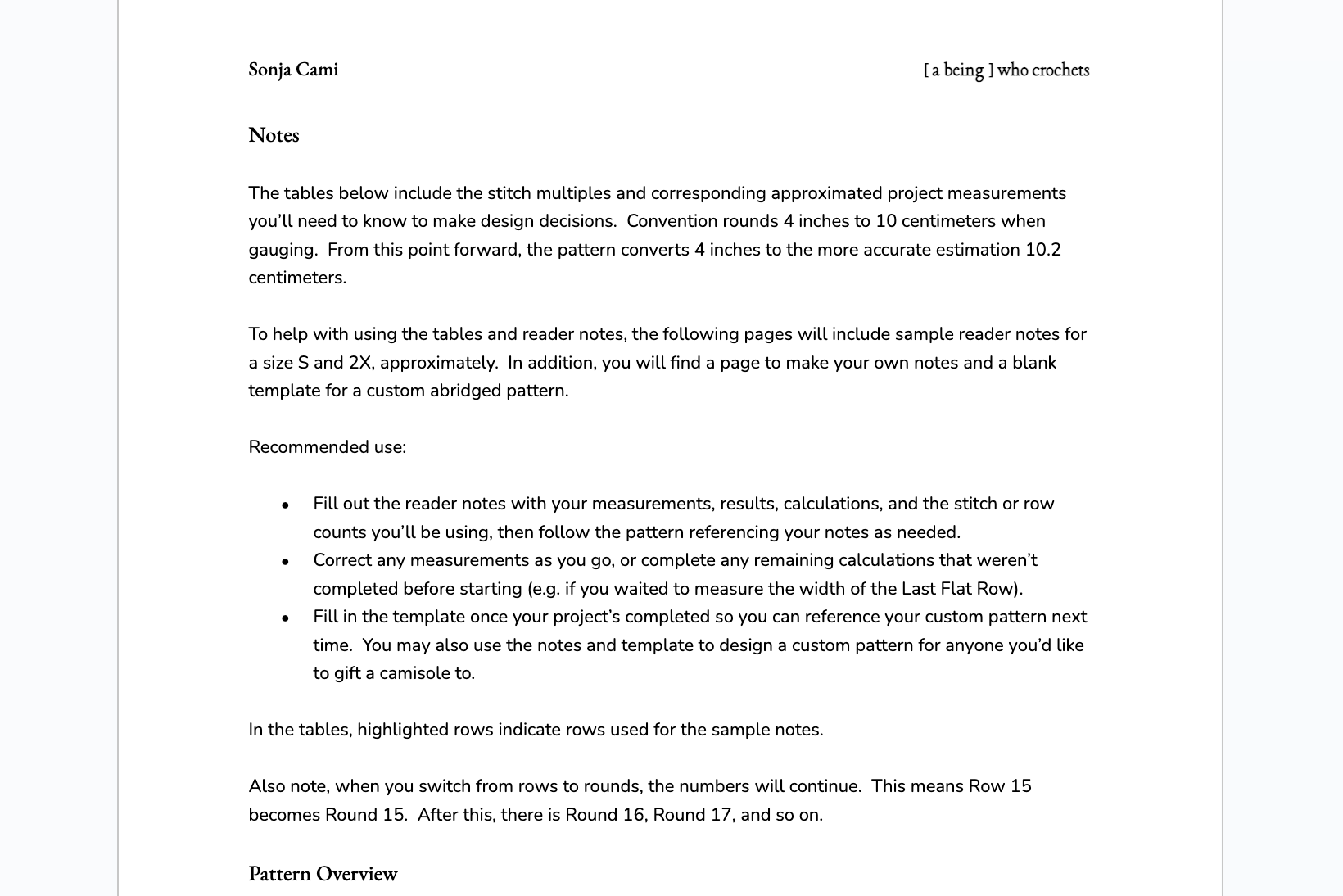
Pattern notes
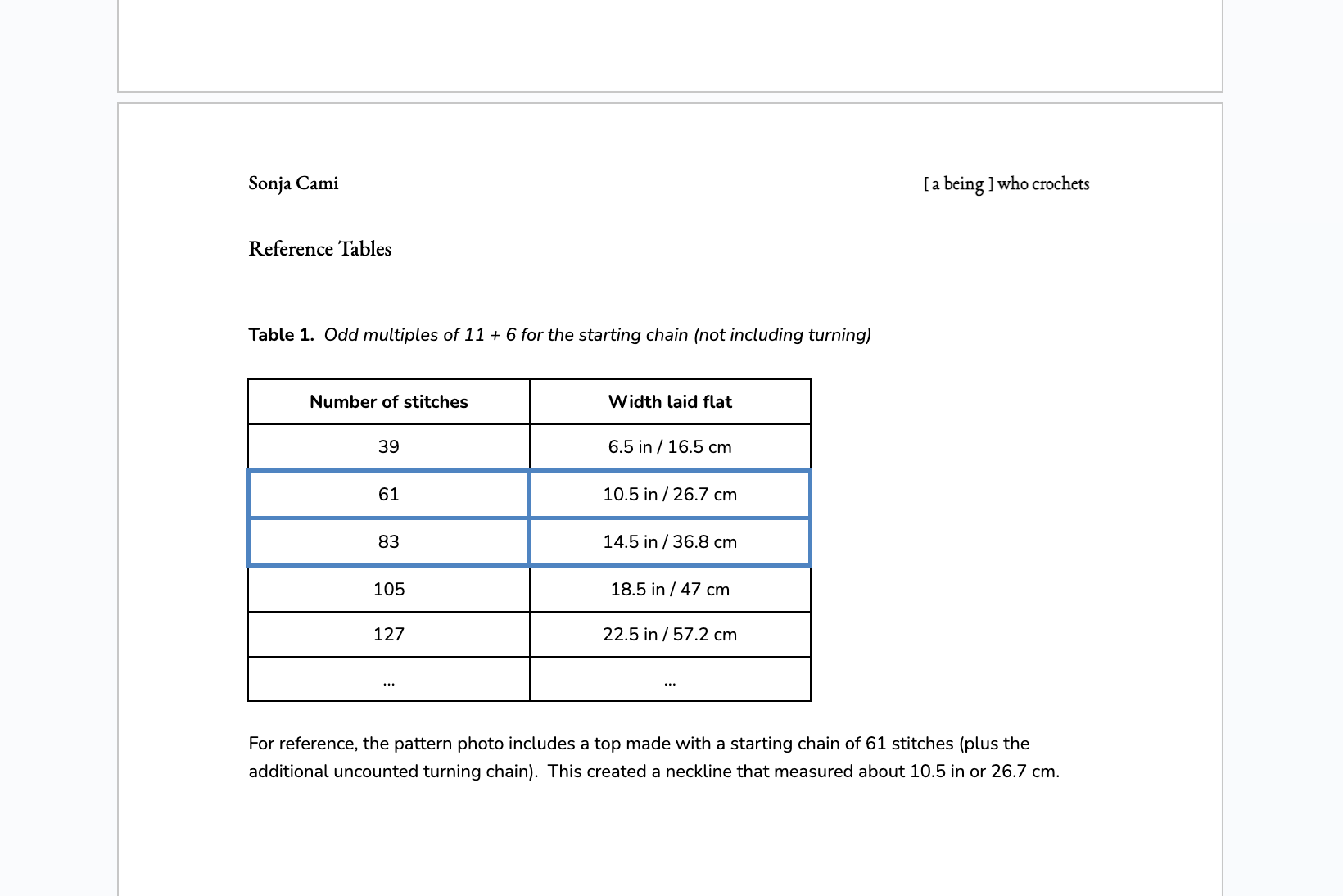
Table 1 of the Reference Tables
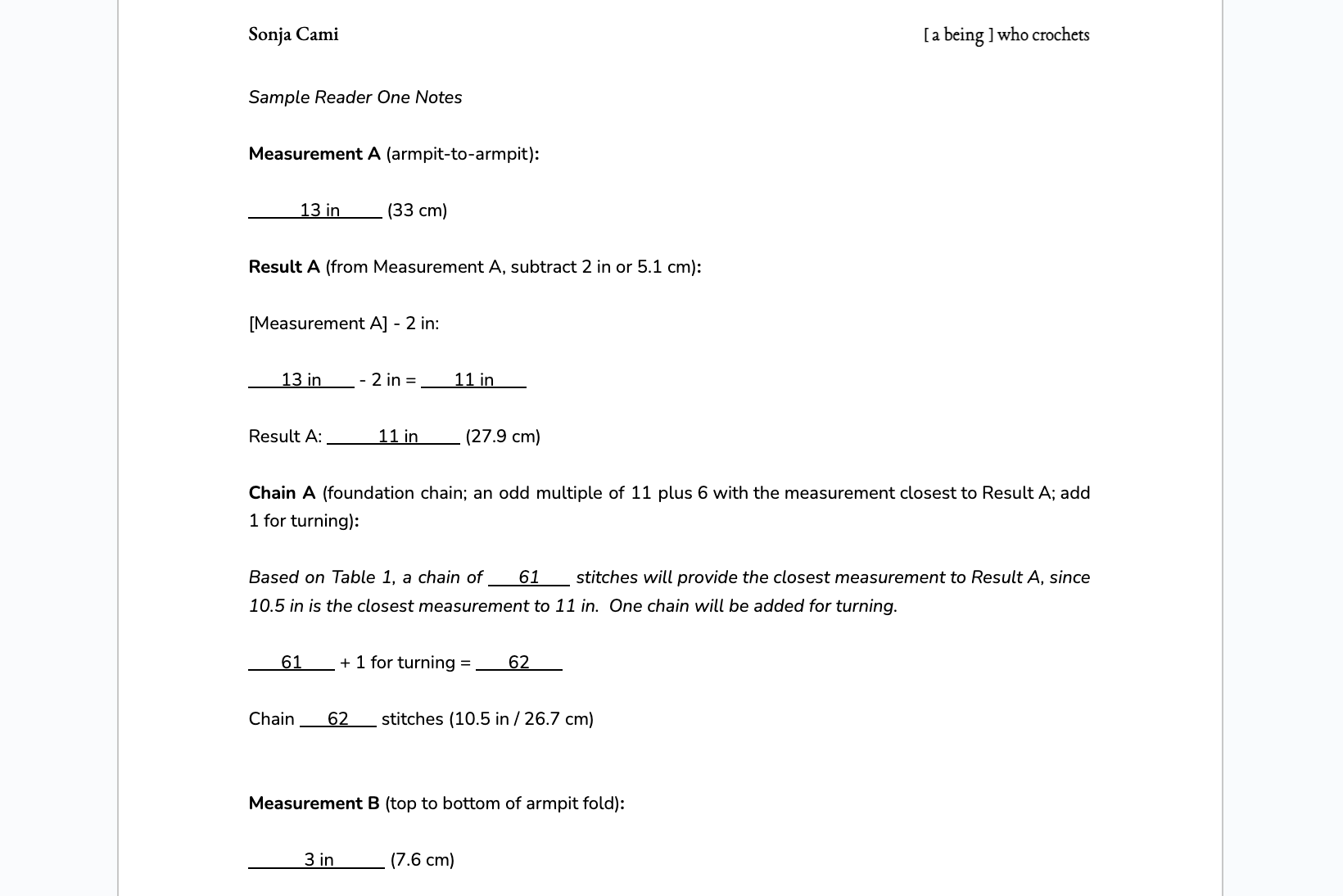
Sample Reader One Notes
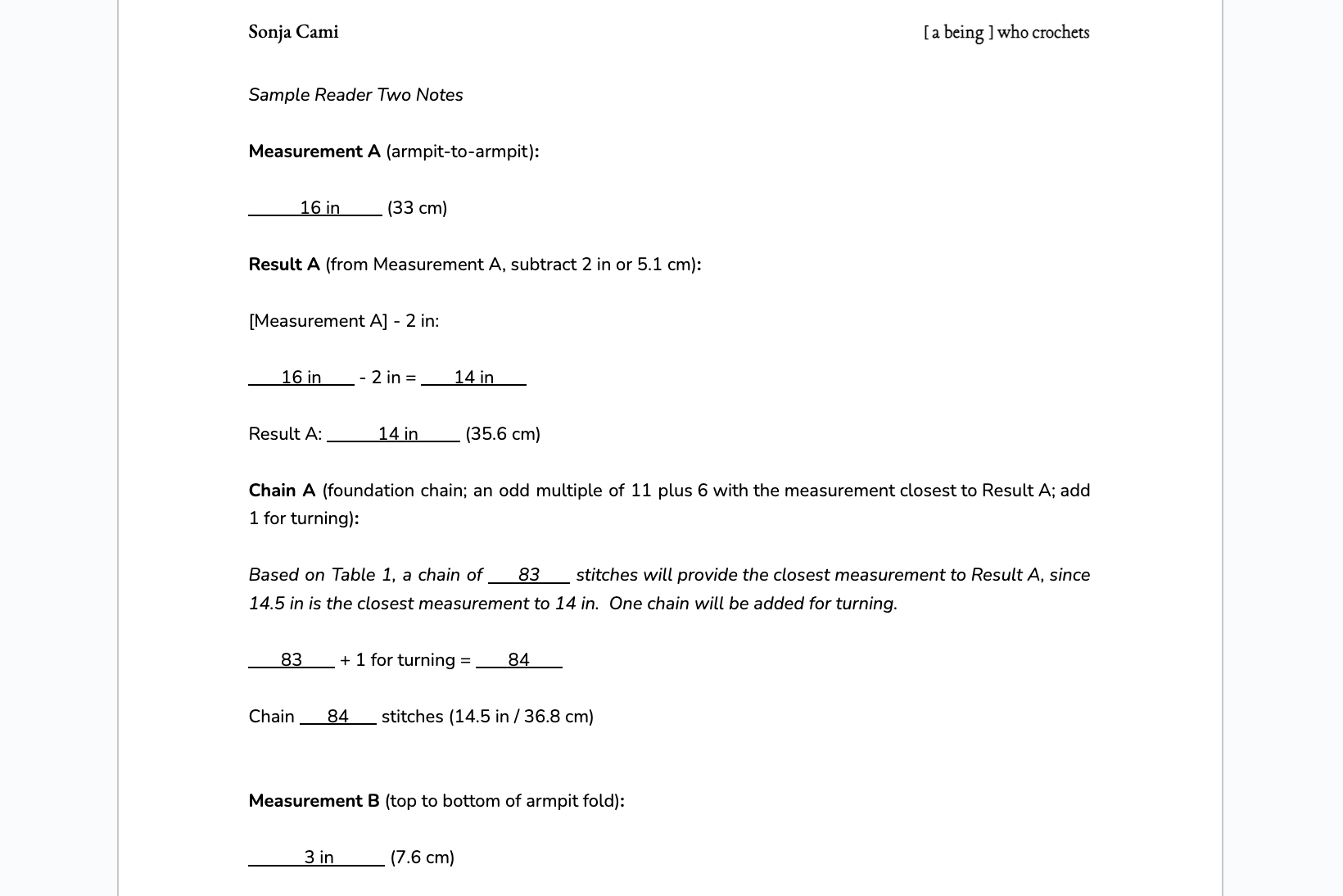
Sample Reader Two Notes
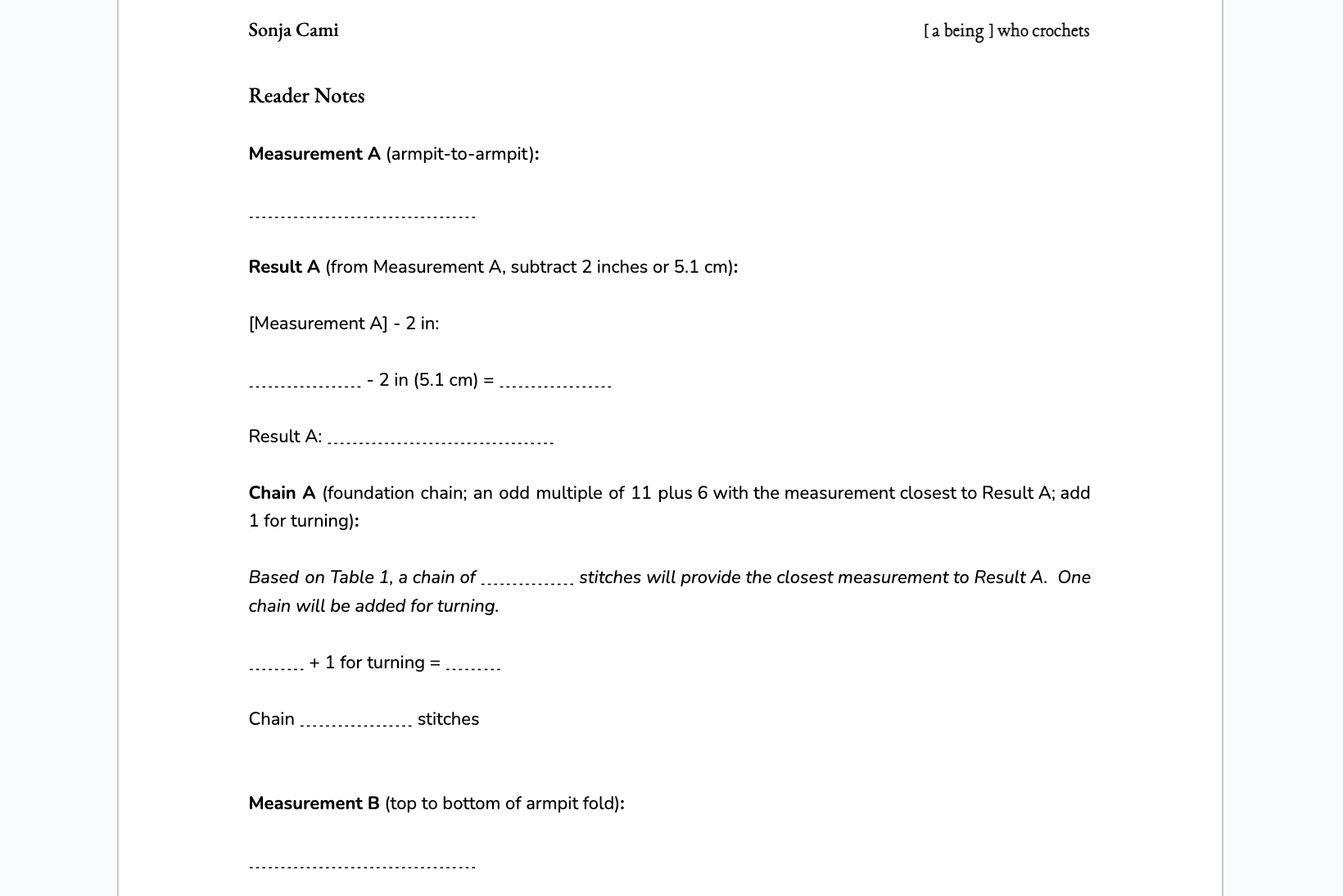
Reader Notes, to be completed
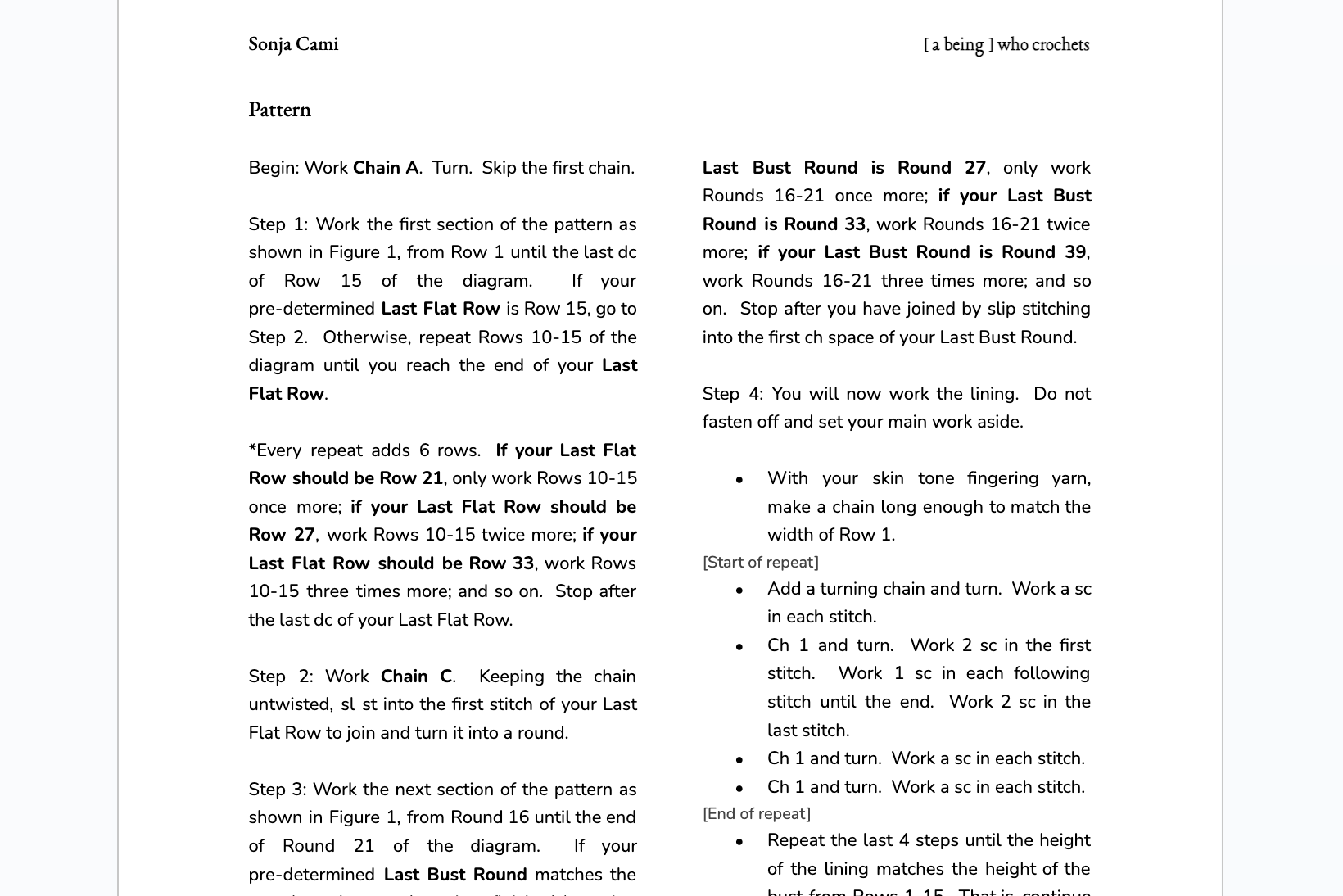
Excerpt from the written instructions
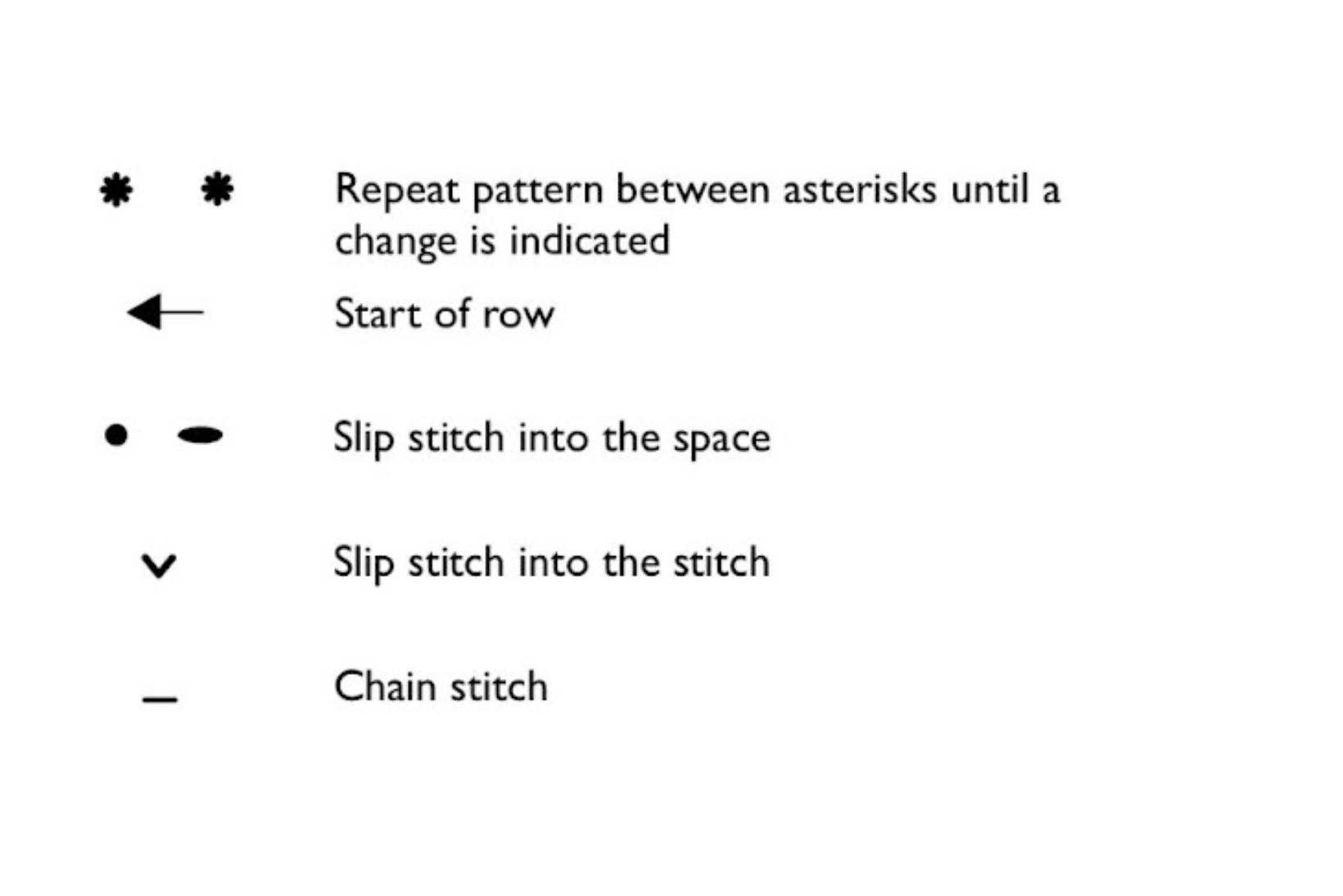
Excerpt from the diagram key
This manual is not intended to simply lead you to a final product. It is designed not only to help you replicate, but to guide your thinking as well. Explicitly and implicitly educational, it is meant to help you embody your identity as a designer.
An actively engaged learner may finish not only with a custom iteration of Sonja, but also with knowledge of how to create a custom camisole in general. You will also gain insight into a few considerations that go into upper garment design.
While construction requires only four of the most basic stitches (chain, slip stitch, single crochet, and double crochet), the care and intrinsic motivation required make this an advanced pattern.
———
Notable Contents
-
Reference Tables: Five tables with possible stitch counts and row multiples you might use for your custom design.
-
Reader Notes: The Reader Notes function as a preparatory worksheet where you can write down any critical measurements, calculations, and design choices before working the pattern. It is recommended that you take about 10 minutes to complete this worksheet first. This way, the actual construction and crochet process is kept streamlined and relatively uninterrupted.
-
Sample Reader Notes (x2): The Sample Reader Notes serve as a guide to completing your own Reader Notes and using the Reference Tables. Two sample readers' notes have been drafted. The first is an approximate size S that doesn't need to increase before working the waist based on the difference between their bust and waist measurements. The second is an approximate size 2X that will need to work an increase.
-
Waist Adjustment Calculator: Made to address one of the key issues in non-inclusive shaping and sizing, this calculator takes your bust and waist measurements to determine if an adjustment will need to be made before making the waist. If an adjustment is needed, it will indicate what and where to adjust based on your measurements and personal design. For the mathematically curious and design-minded, the closing page of the calculator also includes a breakdown of how the calculator works and further details about making waist adjustments.
-
Written Instructions: The 8-step accompaniment to a schematic diagram that will allow you to construct a top just for you or the recipient of your choice.
-
Schematic Diagram: Hand-drawn with a variety of visibility needs in mind, this full-page diagram presents the critical stitch work of Sonja. As the diagram reflects a few non-standard techniques and also covers almost 50 rows of stitch work, for increased accessibility, a brief diagram transcription follows as well.
Recommended: View the diagram on a device that allows you to zoom in. For easier print reading, full-page versions of the diagram and key are also available as an unmarked appendix at the end of the PDF. -
Custom Pattern Template: A blank abridged template for readers to fill in using their Reader Notes. If printed with 2 document pages per printer page, this version of the instructions can be folded up and carried for easy reference when crocheting outside of the home.
———
This pattern is designed to be rewarding and cognitively stimulating. Take your time, enjoy the process, and consider each step as you go. This may not be your "wind down after work" project, but it makes a wonderful "Sudoku on a Sunday afternoon" kind of project.
![[ a being ]](http://abeing.co/cdn/shop/files/Style_Guide-Picsart-BackgroundRemover_377326d6-8784-4e3c-a5cc-5540a058ba4b.png?v=1769674154&width=3840)